Didn't find the perfect trip?
Let us craft a tailor-made adventure just for you.
Associated With


Let us craft a tailor-made adventure just for you.
Associated With

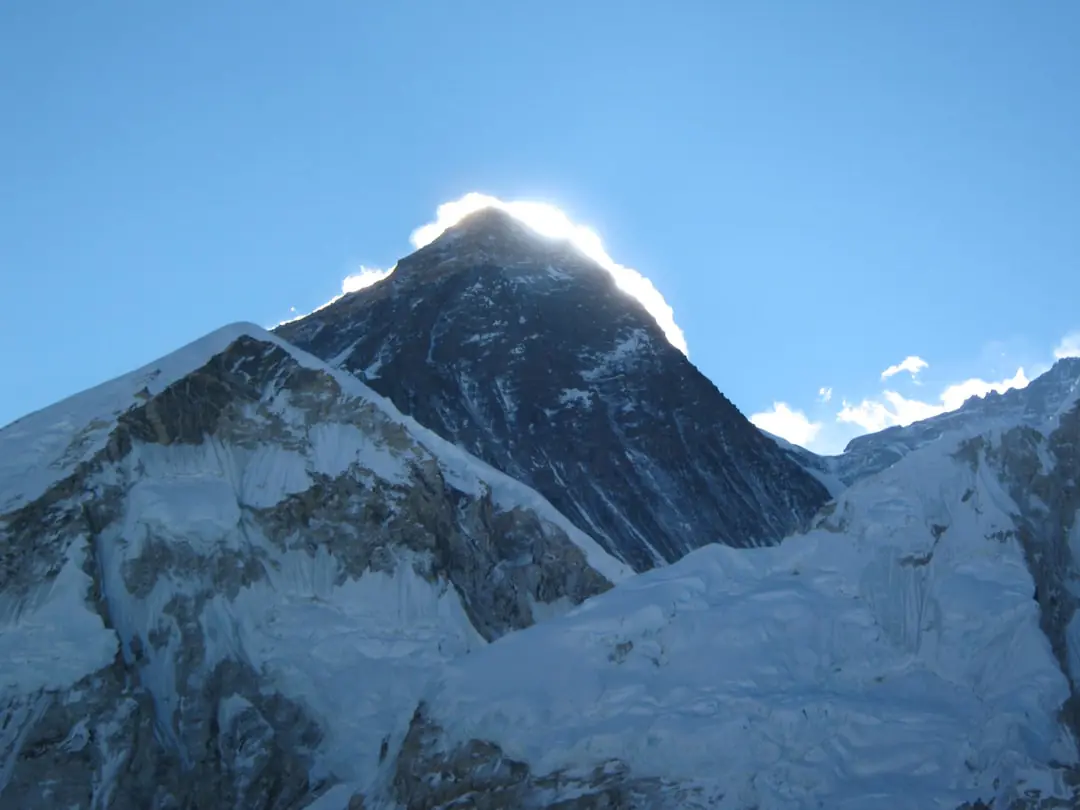
The Mount Everest Expedition is the most iconic challenge in mountaineering. Rising to 8,848.86 meters (29,032 ft), Everest stands on the border of Nepal and Tibet and represents the highest point on Earth. Climbing this peak requires not only physical endurance but also patience, technical skill, and careful acclimatization in the thin air of the upper Himalaya.
The expedition begins in Kathmandu before flying to the dramatic mountain airstrip of Lukla. From there, climbers trek through the heart of the Khumbu region—passing Sherpa villages, suspension bridges, and Buddhist monasteries—until reaching Everest Base Camp. The approach trek is both culturally rich and strategically important, helping the body adjust to altitude before the climbing phase begins.
At Base Camp, teams spend several weeks preparing equipment, reviewing climbing techniques, and completing acclimatization rotations. The route above base camp passes through the notorious Khumbu Icefall, a shifting maze of crevasses and towering ice blocks. Climbers then progress through a series of high camps: Camp I in the Western Cwm, Camp II at the base of the Lhotse Face, Camp III carved into the steep blue ice wall, and Camp IV on the exposed South Col.
From the South Col, climbers make their summit push under the cover of night. The route climbs past the Balcony, the South Summit, and the famous Hillary Step area before reaching the top of the world. Standing on Everest’s summit offers a rare view across the Himalayan giants of Nepal and Tibet—a reward earned after weeks of preparation, patience, and perseverance.
Our Everest expedition is led by experienced guides and supported by highly skilled Sherpa climbers who manage route logistics, safety systems, and high-altitude camps. With carefully planned acclimatization and professional expedition support, climbers are given the best possible environment to pursue one of the greatest objectives in mountaineering.
Arrival in Kathmandu and Transfer to hotel. (1,400m/4,593 ft)
-03:Preparation, briefings, shopping and formalities for permit. (1,400m/4,593 ft)
Drive to Manthali, Fly to Lukla and Trek to Phakding (2652m-.) 4 hours
Trek to Namche Bazaar (3440m-.) 6 hours
Rest & acclimatization, explore Everest View Hotel (3800m-.) 3 hours
Trek to Tyangboche (3850m-.); Explore Buddhist monastery 5 hours
Trek to Dingboche (4350m-.) 5 hours
Trek to Lobuche (5018m-.) 4 hours
Rest for acclimatization at Lobuche (5,018m/16,463 ft)
Trek to Gorakshep (5170m-.) 3 hours
Trek to Everest Base camp (5200m-.) 2 hours
- 56:Climbing period Summit Everest (8,848.86m), full camping
Down trek to Gorakshep, overnight lodge (5,200m/17,060 ft)
Trek via Lobuche (5218m)toDingboche(4260m-.) 5 hours
Trek to Tyangboche (3860m-.) 5 hours
Trek to Namche Bazaar (3440m-.) 4 hours
Trek to Lukla (2840m-.) 7 hours
Fly from Lukla to Manthali or Kathmandu, Drive to Kathmandu; hotel transfer (1,400m/4,593 ft)
Contingency Day in Kathmandu, Farewell-Celebration dinner (2,840m/9,318 ft)
Transfer to the airport for final departure, end of the trip (2,840m/9,318 ft)
This itinerary is customizable. If you want to modify any aspect of this trip, let us know and we'll create a personalized itinerary just for you.
CUSTOMIZE MY TRIPThe primary climbing season for Everest from Nepal is April to May. During this period, temperatures stabilize and winds on the summit are generally calmer, creating a narrow window for summit attempts. A secondary season occurs in September to October, though it is less common due to colder conditions and shorter weather windows.
Climbers must obtain an official Everest Expedition Permit from the Government of Nepal. Additional documentation includes the Sagarmatha National Park entry permit and Khumbu local municipality permit. Our expedition team arranges all required permits and regulatory paperwork.
This expedition is considered extreme difficulty. Climbers must have prior experience on high altitude peaks (preferably above 6,500–7,000 meters), strong endurance, and solid technical mountaineering skills including fixed rope climbing and crevasse rescue.
Most international travelers can obtain a Nepal tourist visa on arrival at Tribhuvan International Airport in Kathmandu. Ensure your passport is valid for at least six months and bring passport photos for the visa application process.
Conditions on Everest are extremely cold and unpredictable. Temperatures at base camp can drop below −15°C while summit temperatures may fall below −30°C with strong winds. Climbers must be prepared for sudden weather changes and prolonged exposure to high altitude environments.
Here's a recommended packing list for your trek. Some items can be rented or purchased in Kathmandu or at the trailhead.