Didn't find the perfect trip?
Let us craft a tailor-made adventure just for you.
Associated With


Let us craft a tailor-made adventure just for you.
Associated With

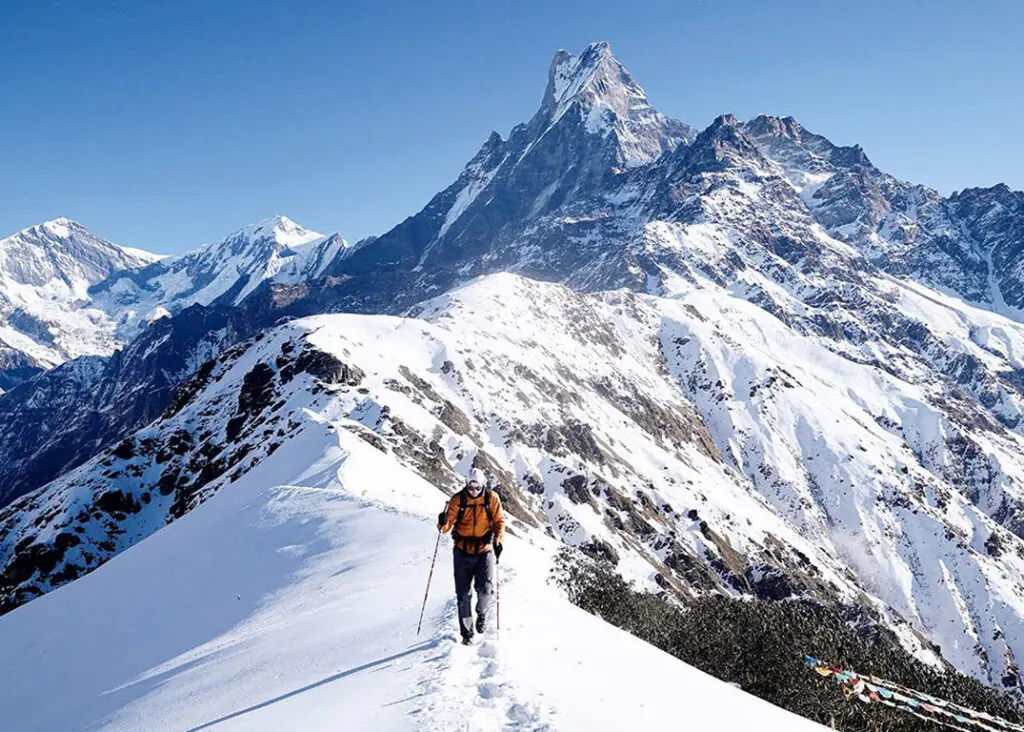
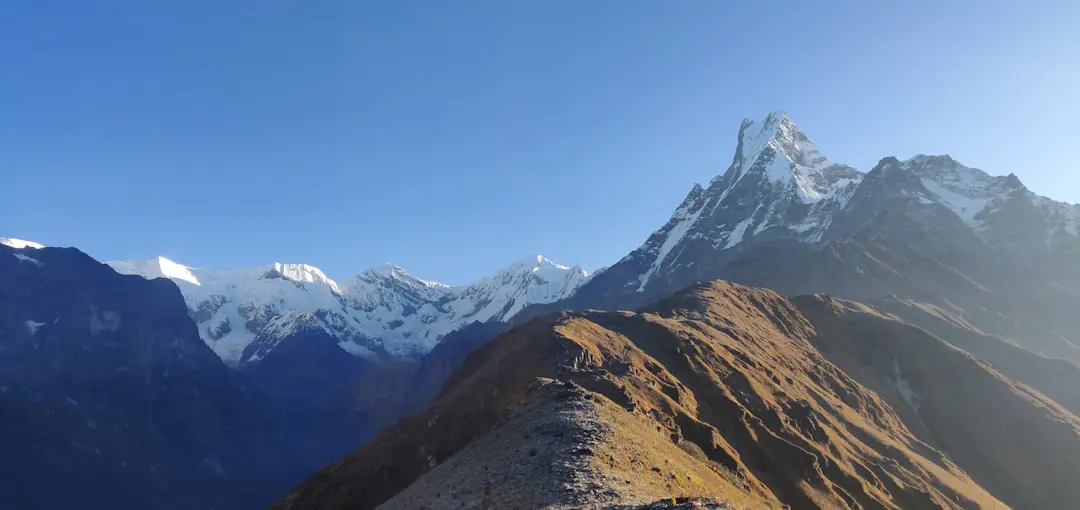
The Mardi Himal Base Camp Trek is one of the most rewarding short treks in Nepal’s Annapurna region. Located just north of Pokhara, this route climbs a beautiful forested ridge toward the dramatic flanks of Machhapuchhre (Fishtail), offering intimate mountain views and a quieter alternative to busier trails like Annapurna Base Camp.
The journey begins with a scenic drive from Kathmandu to the lakeside city of Pokhara. From there, the trail gradually ascends through terraced farmland and traditional villages before entering dense forests of oak, maple, and rhododendron. During spring, the hillsides bloom with vibrant red and pink rhododendron flowers, creating a colorful canopy along the path.
As the trek gains elevation, the landscape opens into alpine meadows and exposed ridgelines. The forest gives way to sweeping Himalayan panoramas where peaks such as Annapurna South (7,219 m), Hiunchuli (6,441 m), and the sacred Machhapuchhre (6,993 m) dominate the skyline. The highlight of the trek is reaching the Mardi Himal Base Camp (4,500 m), where trekkers stand beneath towering snow-covered walls with an uninterrupted view of the Annapurna massif.
Another rewarding aspect of the Mardi Himal trek is the cultural experience. Along the lower trails, you pass through villages inhabited by Gurung and Magar communities, where traditional stone houses, terraced fields, and warm hospitality reflect the mountain lifestyle of Nepal.
The trek is considered moderate in difficulty, making it suitable for trekkers with basic fitness and a sense of adventure. Daily hikes typically last five to seven hours, and accommodation is provided in comfortable tea houses along the route.
For travelers seeking spectacular Himalayan scenery, diverse landscapes, and a peaceful trail that avoids the crowds, the Mardi Himal Base Camp Trek is an exceptional choice. Within a relatively short timeframe, it delivers dramatic mountain vistas, cultural encounters, and a memorable Himalayan trekking experience.
Arrival in Kathmandu (1,400m/4,593 ft) Arrival day
Kathmandu Sightseeing and Trek Preparation (1,400m/4,593 ft) Full day
Drive from Kathmandu to Pokhara (900m/2,953 ft) 7–8 hours
Drive to Kande and Trek to Australian Camp (2,060m/6,759 ft) 3–4 hours
Trek to Forest Camp (2,600m/8,530 ft) 6–7 hours
Trek to Low Camp (3,050m/10,007 ft) 4–5 hours
Trek to High Camp (3,550m/11,647 ft) 5–6 hours
Hike to Mardi Himal Base Camp and Return to High Camp (3,550m/11,647 ft) 6–7 hours
Trek to Landruk Village (1,565m/5,135 ft) 6–7 hours
Trek to Syauli Bazaar and Drive to Pokhara (900m/2,953 ft) 3–4 hours trek + 2 hours drive
Rest and Explore Pokhara (900m/2,953 ft) Leisure day
Drive Back to Kathmandu (1,400m/4,593 ft) 7–8 hours
Departure from Kathmandu (1,400m/4,593 ft) Departure day
This itinerary is customizable. If you want to modify any aspect of this trip, let us know and we'll create a personalized itinerary just for you.
CUSTOMIZE MY TRIPThe most favorable seasons for the Mardi Himal Trek are spring (March to May) and autumn (September to November). During spring, the forests bloom with rhododendrons and the weather is mild. Autumn offers crisp air and excellent mountain visibility. Winter trekking is possible but temperatures at high camps can drop below freezing.
Trekkers must obtain two permits for this trek: the Annapurna Conservation Area Permit (ACAP) and the Trekkers Information Management System (TIMS) card. These permits help support conservation efforts and ensure trekker safety in the region.
The trek is considered moderate and suitable for trekkers with reasonable physical fitness. Daily hiking typically lasts between five and seven hours with gradual elevation gain. Preparing with cardio activities such as hiking, running, or cycling before the trip is recommended.
Most travelers can obtain a Nepal tourist visa upon arrival at Tribhuvan International Airport in Kathmandu. Visitors should carry a passport valid for at least six months and a passport-sized photo. Visa fees vary depending on the duration of stay.
The Mardi Himal route passes through several climate zones, ranging from subtropical forests to alpine terrain. Lower elevations are generally mild, while higher camps experience colder temperatures and stronger winds. Daytime trekking temperatures are comfortable during peak seasons, but nights above 3,500 meters can be chilly.
Here's a recommended packing list for your trek. Some items can be rented or purchased in Kathmandu or at the trailhead.