Didn't find the perfect trip?
Let us craft a tailor-made adventure just for you.
Associated With


Let us craft a tailor-made adventure just for you.
Associated With

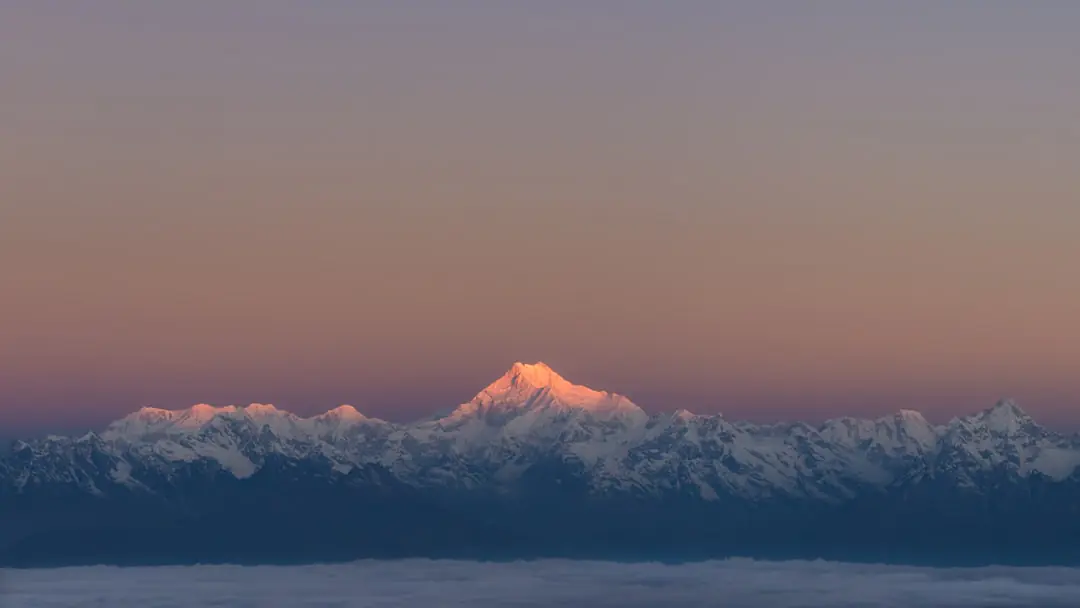
The Kanchenjunga Circuit Trek is one of Nepal’s most remote and rewarding long-distance treks. Encircling the vast massif of Mount Kanchenjunga (8,586 m), the third-highest mountain on Earth, this expedition-style journey leads trekkers to both the North Base Camp at Pangpema and the South Base Camp near the Yalung Glacier. The trail lies in far eastern Nepal along the border with India’s Sikkim region, an area that remains wonderfully wild and far less visited than the country’s classic trekking routes.
Over the course of the journey, trekkers pass through deep river valleys, dense forests of rhododendron and magnolia, alpine meadows, and glacial landscapes. The route cuts through the protected Kanchenjunga Conservation Area, a vast wilderness home to rare Himalayan wildlife such as snow leopards, red pandas, musk deer, and colorful mountain pheasants. The diversity of ecosystems makes each section of the trail feel distinct and constantly evolving.
Cultural encounters are equally memorable. Villages along the trail are inhabited by Rai, Limbu, Sherpa, and Tibetan-influenced communities whose traditions remain closely connected to the mountains. Monasteries, prayer walls, and mani stones appear along the route, while small settlements provide welcoming tea houses where trekkers can experience authentic Himalayan hospitality.
The adventure reaches its high point at Pangpema (5,143 m), the North Base Camp of Kanchenjunga, where immense glaciers spill down from towering summits including Kanchenjunga, Wedge Peak, and Chang Himal. Later in the journey, trekkers cross high passes linking the northern and southern valleys before arriving at the Yalung Glacier and the dramatic South Base Camp.
Because of its remoteness and challenging terrain, the Kanchenjunga Circuit Trek is best suited for experienced trekkers seeking a true Himalayan expedition. Long days on the trail, high altitude, and limited infrastructure add to the sense of adventure. For those willing to go beyond the mainstream routes, the reward is an extraordinary trek through one of the most untouched mountain regions in Nepal.
Arrival in Kathmandu (1,360m/4,462 ft)
Sightseeing in Kathmandu Tour (1,360m/4,462 ft) 5-6 hours
Fly from Kathmandu to Bhadrapur(91 m/298 ft) (45 minutes) and Drive to Illam 4/ 5 hours
Drive from Illam to Taplejung () (1,820m/5,971 ft) 5 hours
Drive to Chirwa () And trek to Sekthum 5/6 hrs (1,585m/5,200 ft) 3-4 hours
Trek from Sekhtum to Amjilosa 5/ (2,510m/8,235 ft) 6 hours
Trek from Amjilosa to Gyabla 6/ (2,730m/8,957 ft) 7 hours
Trek from Gyabla to Ghunsa 6/ (3,595m/11,795 ft) 7 hours
Acclimatization day in Ghunsa (Explore Tibetan Village Ghunsha Lake) 4000m/13123 ft
Trek from Ghunsa to Kambachen 5/ (4,050m/13,287 ft) 6 hours
Side trip to Janu Himal Base Camp (4,500m/14,764 ft) 7 hours
Trek from Kambachen to Lhonak (4,785m/15,699 ft) 5 hours
Trek to Kanchenjunga North Base Camp and Back to Lhonak (4785m/15698 ft) 8 hours
Trek from Lhonak to Ghunsa (3,595m/11,795 ft) 7 hours
Trek from Ghunsa to Selele La Base Camp 4/ (4,200m/13,780 ft) 5 hours
Trek from Selele La to Cheram crossing 3 major Pass 7/ (3,870m/12,697 ft) 8 hours
Trek from Cheram to Ramche Via Oktang View Point (4730m/15517 ft) Back to Cheram 7/ 8 hours
Trek from Cheram to Torongding 5/ (2,080m/6,824 ft) 6 hours
Trek from Torongding to Sherpa Gaun 6/ (2,200m/7,218 ft) 7 hours
Trek from Sherpa Gaun to Khebang (1,910m/6,266 ft) 5 hours
Trek from Khebang to Happukhola (1,050m/3,445 ft) 5 hours
Drive Illam from Happukhola (1,627m/5,338 ft) 4 hours
Fly from Bhadrapur to Kathmandu 45 Min Flight (1,360m/4,462 ft)
Depart Kathmandu (1,400m/4,593 ft)
This itinerary is customizable. If you want to modify any aspect of this trip, let us know and we'll create a personalized itinerary just for you.
CUSTOMIZE MY TRIPThe ideal seasons for the Kanchenjunga Circuit Trek are spring (March to May) and autumn (September to November). During these months, the skies are generally clear, temperatures are moderate, and mountain views are at their best. Spring brings blooming rhododendron forests, while autumn offers crisp air and exceptional visibility. Winter is extremely cold in the high valleys, and the summer monsoon brings heavy rain and landslides in the lower regions.
The Kanchenjunga region is classified as a restricted trekking area. Trekkers must obtain a Restricted Area Permit along with the Kanchenjunga Conservation Area Permit (KCAP). Regulations require trekkers to travel with a registered guide and at least one trekking partner.
This trek is considered strenuous due to its long duration, remote terrain, and high altitude. Daily walks of 5–7 hours are common, with some longer days while crossing high passes. Prior trekking experience and strong cardiovascular fitness are strongly recommended for a safe and enjoyable journey.
Most travelers can obtain a Nepal visa on arrival at Tribhuvan International Airport in Kathmandu. Ensure your passport is valid for at least six months and bring passport photos and the visa fee in USD or equivalent currency.
The trek passes through multiple climate zones, from warm subtropical valleys to cold alpine terrain above 5,000 meters. Temperatures can drop well below freezing at higher elevations, especially at night. Weather can change rapidly in the mountains, so proper layering and weatherproof gear are essential.
Here's a recommended packing list for your trek. Some items can be rented or purchased in Kathmandu or at the trailhead.