Didn't find the perfect trip?
Let us craft a tailor-made adventure just for you.
Associated With


Let us craft a tailor-made adventure just for you.
Associated With

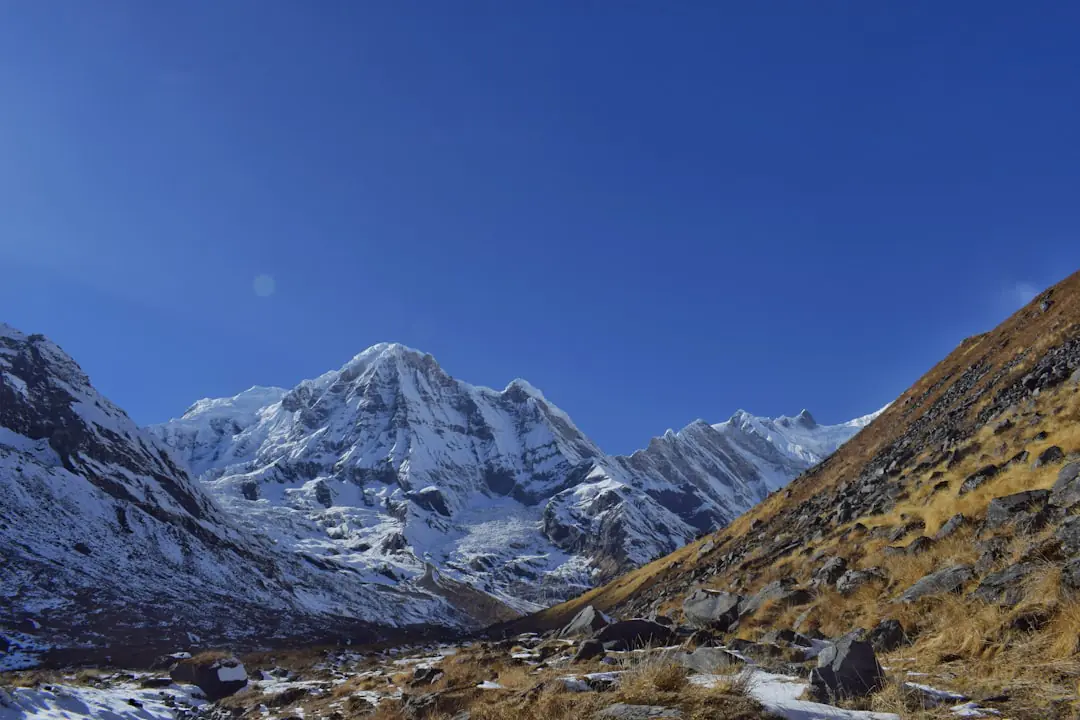
Himlung Himal rises to 7,126 meters in a remote corner of Nepal close to the Tibetan border. Hidden beyond the Nar Phu Valley in the greater Manaslu region, this impressive peak offers one of the most accessible 7000‑meter expeditions in the Himalaya while still demanding strong mountaineering ability and careful acclimatization.
The journey begins with a classic Himalayan approach through the Marsyangdi Valley, following part of the legendary Annapurna Circuit route before turning north toward the isolated Nar Phu region. Ancient stone villages, centuries‑old monasteries, and high desert landscapes reveal a culture strongly influenced by Tibet. Prayer walls, chortens, and yak caravans accompany the trail as the expedition gradually climbs toward the upper valley.
After acclimatization in the historic village of Phu, the team moves toward Himlung Base Camp, situated on a broad alpine meadow surrounded by glaciers and towering peaks. From here the true expedition phase begins. Climbers establish a series of higher camps on the mountain, typically Camp I, Camp II, and Camp III, preparing carefully for the summit push.
The climb itself is considered less technical than many Himalayan giants, making Himlung a popular progression peak for experienced climbers preparing for larger 8000‑meter expeditions. However, the altitude, cold temperatures, and glaciated terrain require solid mountaineering skills, excellent physical conditioning, and the support of experienced Sherpa guides.
Summit day rewards the effort with a sweeping panorama across the Annapurna, Manaslu, and Tibetan Himalayan ranges. Far below lie the remote valleys you trekked through to reach this wild corner of Nepal.
This expedition blends cultural discovery, remote trekking, and serious high‑altitude climbing into one of the most rewarding Himalayan adventures for mountaineers ready to step into the world of 7000‑meter peaks.
Arrive in Kathmandu (1,350m/4,429 ft)
Kathmandu Sightseeing and Expedition Preparation (1,350m/4,429 ft)
Drive from Kathmandu to Besisahar (760m/2,493 ft)
Drive from Besisahar to Koto (2,600m/8,530 ft)
Trek from Koto to Meta (3,560m/11,680 ft)
Trek from Meta to Kyang (3,840m/12,598 ft)
Trek from Kyang to Phu (4,080m/13,386 ft)
Acclimatization Day - Phu (4,080m/13,386 ft)
Trek from Phu to Himlung Base Camp (4,900m/16,076 ft)
-19: Himlung Himal Climbing Period (7,126m/23,379 ft)
Trek back to Phu (4,080m/13,386 ft)
Trek from Phu to Meta (3,560m/11,680 ft)
Trek from Meta to Koto (1,000m/3,281 ft)
Drive to Besisahar (760m/2,493 ft)
Drive back to Kathmandu (1,400m/4,593 ft)
Final Departure (760m/2,493 ft)
This itinerary is customizable. If you want to modify any aspect of this trip, let us know and we'll create a personalized itinerary just for you.
CUSTOMIZE MY TRIPThe most stable seasons for the Himlung Himal Expedition are spring (March to May) and autumn (September to November). During these months the weather is generally clearer, winds are more predictable, and summit windows are more likely. Spring offers warmer temperatures and good climbing conditions, while autumn provides crisp visibility and stable skies.
Climbers require several permits including the Himlung Himal expedition permit issued by the Nepal government, a restricted area permit for the Nar Phu Valley, Annapurna Conservation Area permits, and local administrative documentation. Our team arranges all necessary permits before the expedition begins.
This is a demanding high‑altitude expedition suitable for experienced mountaineers. Participants should have previous climbing experience on peaks above 6000 meters and be comfortable with crampon travel, rope systems, and glacier conditions. Strong endurance and mental resilience are essential for summit success.
Most travelers obtain a Nepal tourist visa on arrival at Tribhuvan International Airport in Kathmandu. Visitors must hold a passport valid for at least six months and carry passport photos. Visa extensions can be arranged in Kathmandu if needed.
Temperatures vary greatly throughout the expedition. Lower valleys can be mild during the day, while base camp and higher camps experience freezing temperatures and strong winds. Summit attempts often occur in temperatures well below -20°C, making proper cold‑weather equipment essential.
Here's a recommended packing list for your trek. Some items can be rented or purchased in Kathmandu or at the trailhead.