Didn't find the perfect trip?
Let us craft a tailor-made adventure just for you.
Associated With


Let us craft a tailor-made adventure just for you.
Associated With

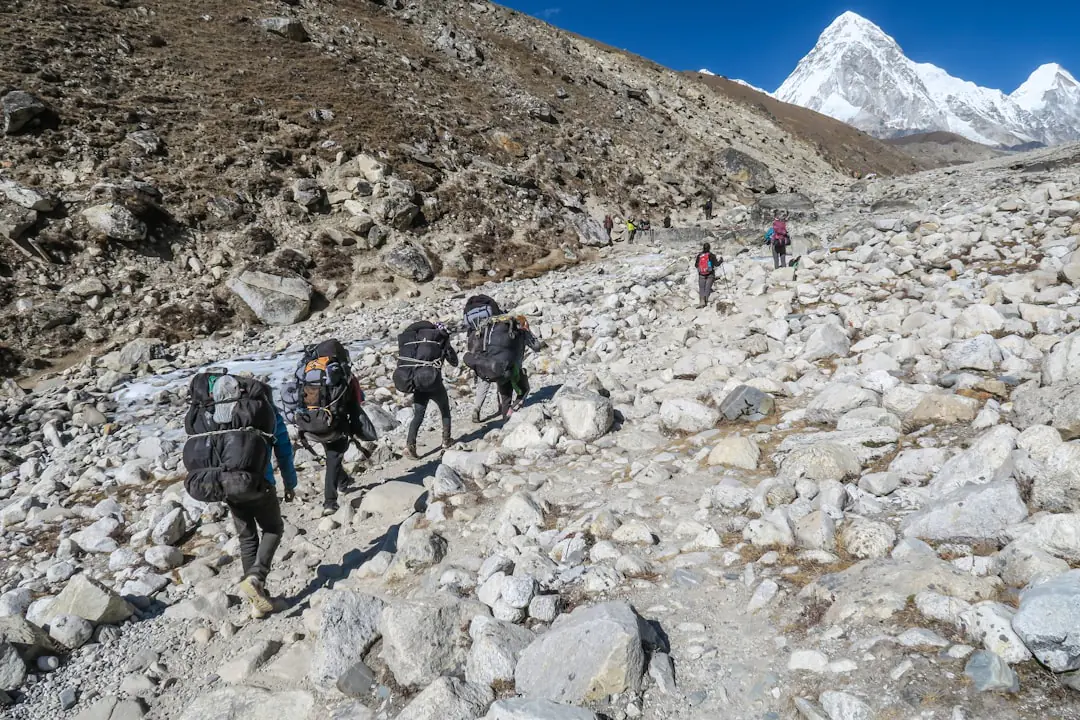
The Everest Base Camp Three Passes Trek is widely considered the most complete trekking circuit in the Khumbu region. Instead of following the classic out-and-back trail to Everest Base Camp, this challenging journey forms a dramatic loop through remote valleys, high mountain passes, glacier basins, and Sherpa settlements. Along the way you cross three legendary Himalayan passes—Kongma La (5,535 m), Cho La (5,420 m), and Renjo La (5,360 m)—each offering vast panoramas of the world’s highest mountains.
The adventure begins with a spectacular flight to Lukla and gradually ascends through pine forests, suspension bridges, and traditional Sherpa villages. You acclimatize in Namche Bazaar before continuing deeper into the Khumbu Valley toward Chhukung, where the first major challenge awaits: Kongma La Pass. From there the trail leads to the glacial landscapes of Lobuche and onward to the legendary Everest Base Camp (5,364 m). A sunrise climb of Kala Patthar reveals a close view of Mount Everest towering above the Khumbu Icefall.
Beyond the classic EBC route, the trek becomes even more adventurous. Crossing the icy Cho La Pass connects the Khumbu Valley with the turquoise lakes of Gokyo. From the summit of Gokyo Ri, trekkers enjoy one of the finest viewpoints in Nepal, where Everest, Lhotse, Makalu, and Cho Oyu appear in a sweeping Himalayan panorama.
The final challenge is Renjo La Pass, a high alpine crossing that offers sweeping views over the Gokyo Lakes and the remote Nangpa La region near Tibet. Descending through quiet Sherpa villages such as Thame, the route gradually returns to the bustling trading hub of Namche Bazaar before concluding back in Lukla.
This trek combines the highlights of Everest Base Camp with remote high-altitude crossings, glacier travel, and spectacular viewpoints. For experienced trekkers seeking a demanding yet immensely rewarding Himalayan expedition, the Everest Three Passes Trek stands among Nepal’s most iconic adventures.
Arrive in Nepal (1,360 meters/4,462 feet) (1,360m/4,462 ft)
Sightseeing the Kathmandu City and Trek Preparation Tour (1,360m/4,462 ft) 5-7 hours
Flight to Lukla (2,840 meters/9,318 feet) and Then Trek to Phakding (2,610 meters/8562 feet) (2,840m/9,318 ft) 4-5 hours
Trek to Namche Bazaar (3,440 meters/11286 feet) (3,440m/11,286 ft) 5-6 hours
Rest, Acclimatization, and Exploration Day in Namche (3,440 meters/11,286 feet) (3,440m/11,286 ft) 4-5 hours
Trek to Tengboche (3,860 meters/12,664 feet) (3,860m/12,664 ft) 5-6 hours
Trek to Dingboche (4,410 meters/14,468 feet) (4,410m/14,469 ft) 5-6 hours
Acclimatization and Exploration Day in Dingboche (4,410 meters/14,468 feet) (4,410m/14,469 ft) 4-5 hours
Trek to Chhukung Village (4,730 meters/15,518 feet) and on the Same Day, Hike to Chhukung Ri (5,546 meters/18,196 feet) (4,730m/15,518 ft)
Trek to Lobuche (4,910 meters/16,109 feet) via Kongma La Pass (5,535 meters/18,160 feet) (4,910m/16,109 ft) 8-10 hours
Trek to Gorakshep (5,170 meters/16,962 feet) and Visit Everest Base Camp (5,363 meters/17,595 feet) and Again Back to Gorakshep (5,170m/16,962 ft) 7-8 hours
Early Morning Hike to Kalapatthar (5,550 meters/18,209 feet) and Then Trek Continue to Dzongla (4,830 meters/15,850 feet) (5,550m/18,209 ft) 6-7 hours
Trek to Dragnag (4,700 meters/15,420 feet) Via Cho La Pass (5,368 meters/17,612 feet) (4,700m/15,420 ft) 8-9 hours
Trek to Gokyo Lake (4,790 meters/15,715 feet) (4,790m/15,715 ft) 3-4 hours
Early Morning Hike to Gokyo Ri (5,357 meters/17,575 feet) for a Sunrise and Mystic Mountain View and Back to Gokyo (5,357m/17,575 ft) 4-5 hours
Trek to Lungden ( 4,380 meters/14,370 feet) via Renjo La Pass (5,360 meters/ 17,586 feet) 7- (4,380m/14,370 ft) 8 hours
Trek to Namche Bazaar (3,440 meters/11,286 feet) (3,440m/11,286 ft) 6-7 hours
Trek to Lukla (2,840 meters/9,318 feet) (2,840m/9,318 ft) 6-7 hours
Fly Back to Kathmandu (1,360 meters/4,462 feet) 30-35 Minutes Flight. (1,360m/4,462 ft)
Final Departure From Tribhuwan International Airport (1,360m/4,462 ft)
This itinerary is customizable. If you want to modify any aspect of this trip, let us know and we'll create a personalized itinerary just for you.
CUSTOMIZE MY TRIPThe most reliable seasons for the Everest Three Passes Trek are spring (March–May) and autumn (September–November). These periods provide stable weather, clear skies, and the best mountain views. Spring brings blooming rhododendron forests while autumn offers crisp air and excellent visibility after the monsoon.
Trekkers must obtain two permits for this route: the Sagarmatha National Park Entry Permit and the Khumbu Pasang Lhamu Rural Municipality Permit. These permits support conservation and local infrastructure within the Everest region.
This trek is physically demanding and recommended for experienced hikers. Expect long days on rugged trails, steep ascents over high passes, and several nights above 5,000 meters. Preparation with endurance training and multi-day hiking is highly recommended.
Most travelers can obtain a Nepal tourist visa upon arrival at Tribhuvan International Airport in Kathmandu. Visas are available for 15, 30, or 90 days. Ensure your passport has at least six months validity.
Weather in the Everest region varies greatly with altitude. Days are generally mild during trekking seasons, while nights above 4,000 meters can drop well below freezing. Conditions across the high passes can change rapidly, making flexibility essential.
Here's a recommended packing list for your trek. Some items can be rented or purchased in Kathmandu or at the trailhead.