Didn't find the perfect trip?
Let us craft a tailor-made adventure just for you.
Associated With


Let us craft a tailor-made adventure just for you.
Associated With

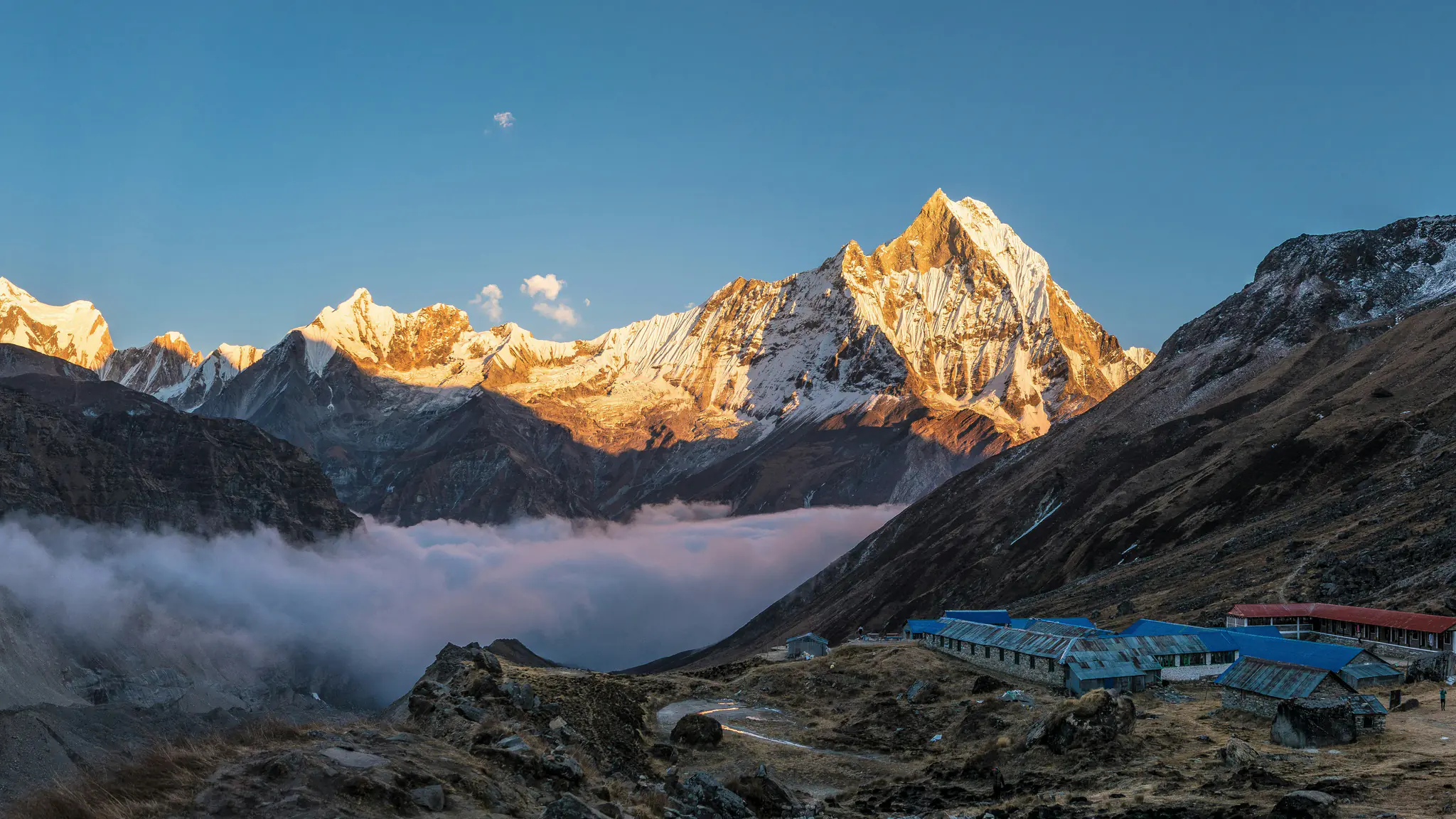
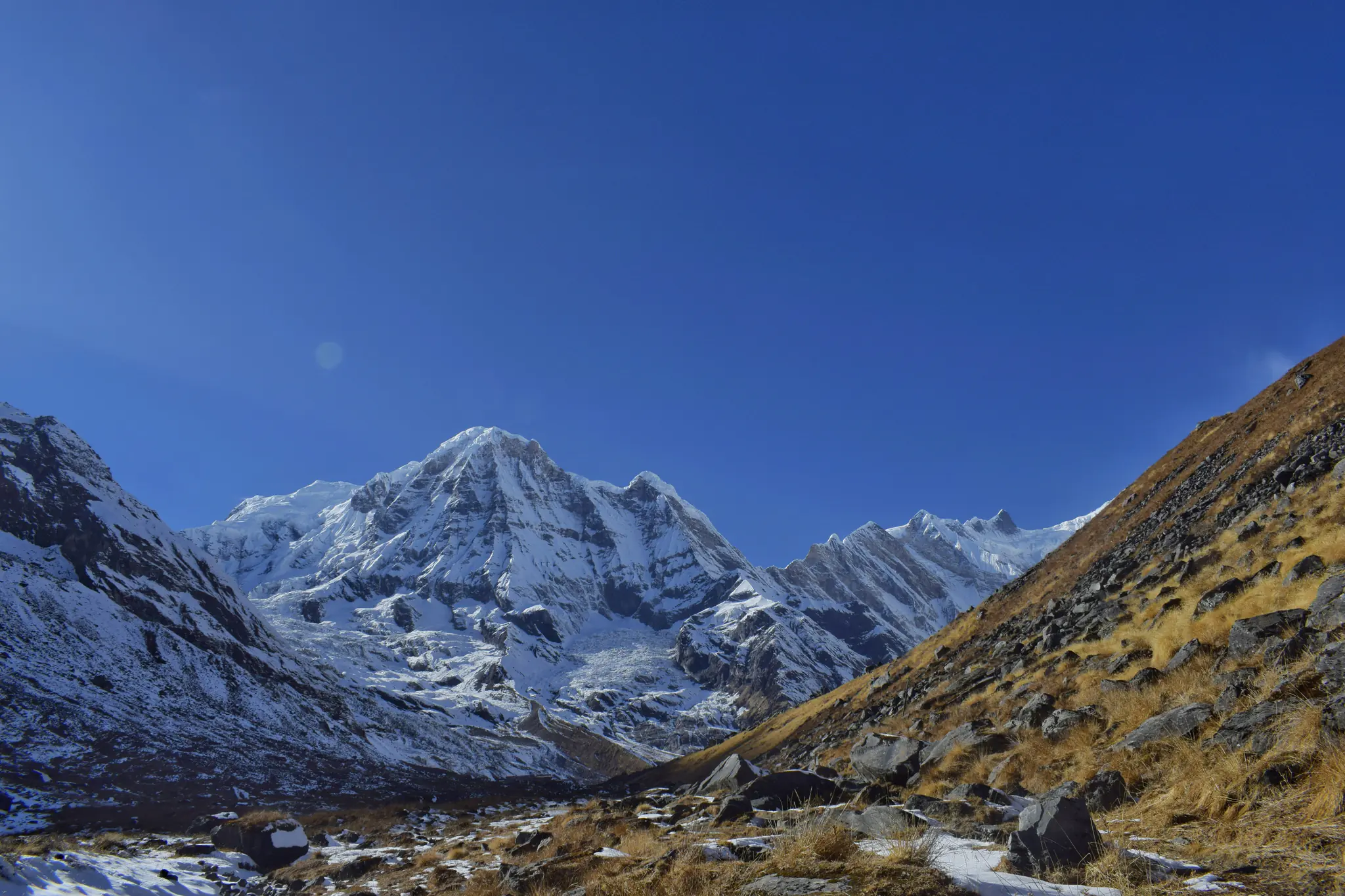
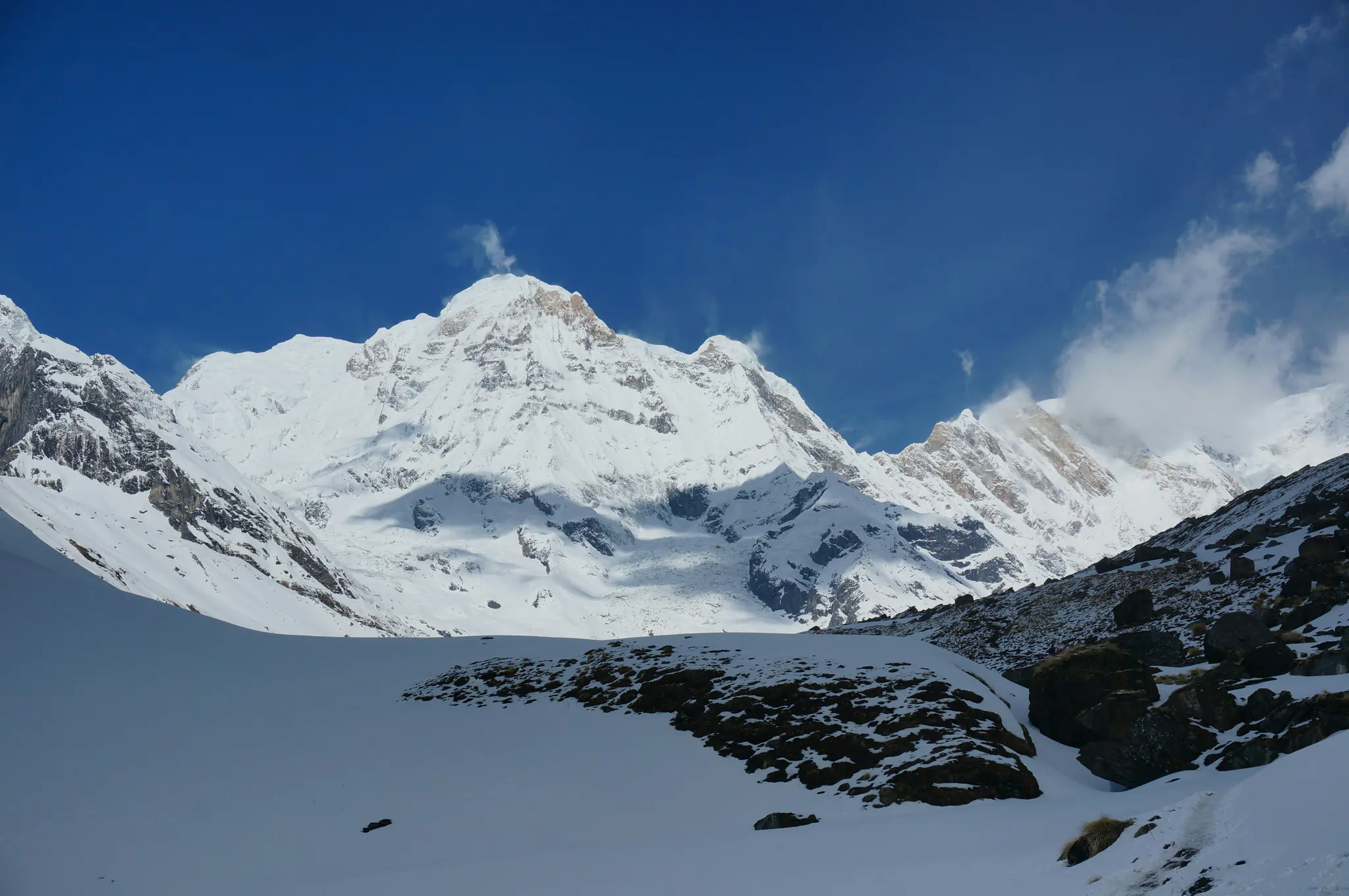
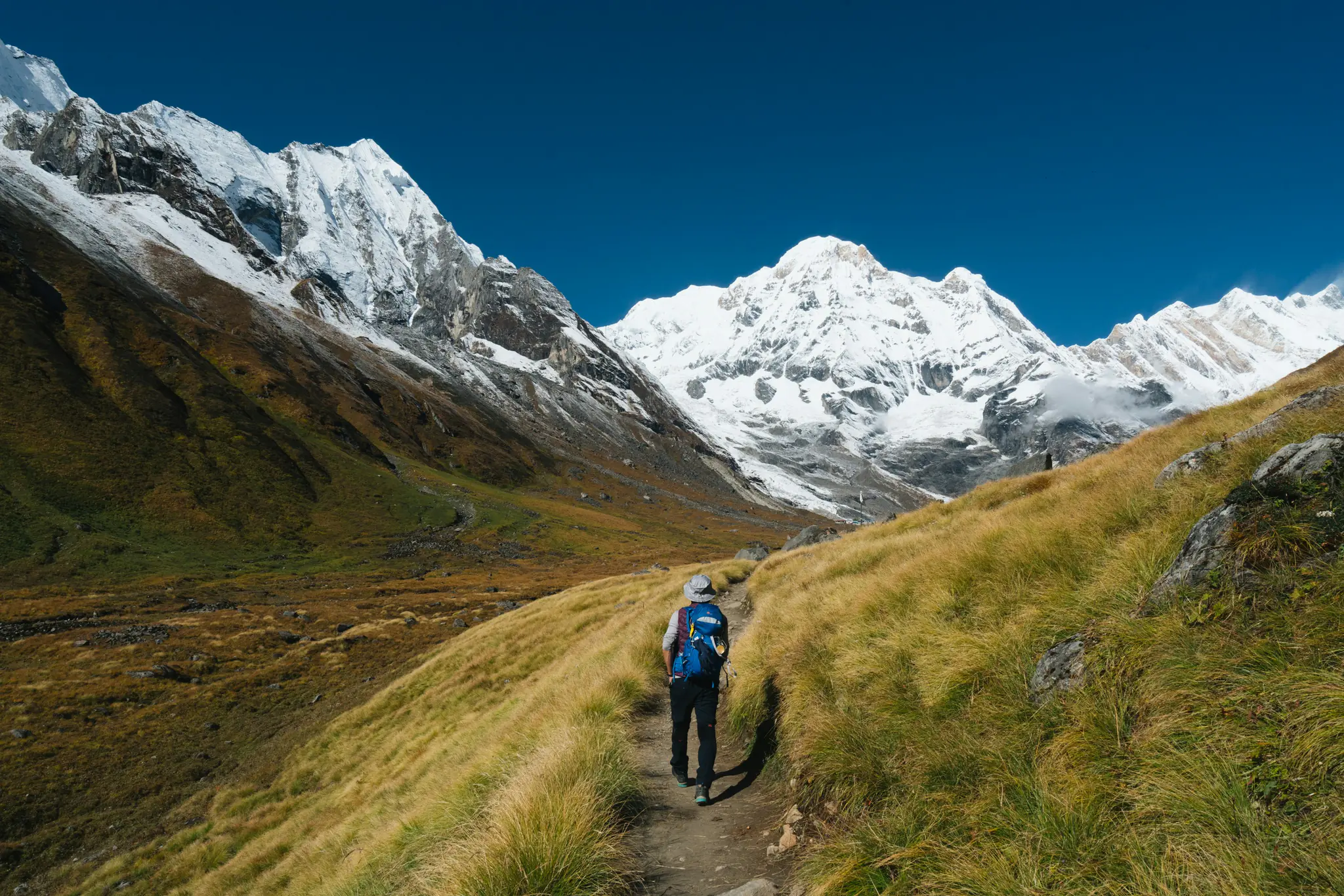
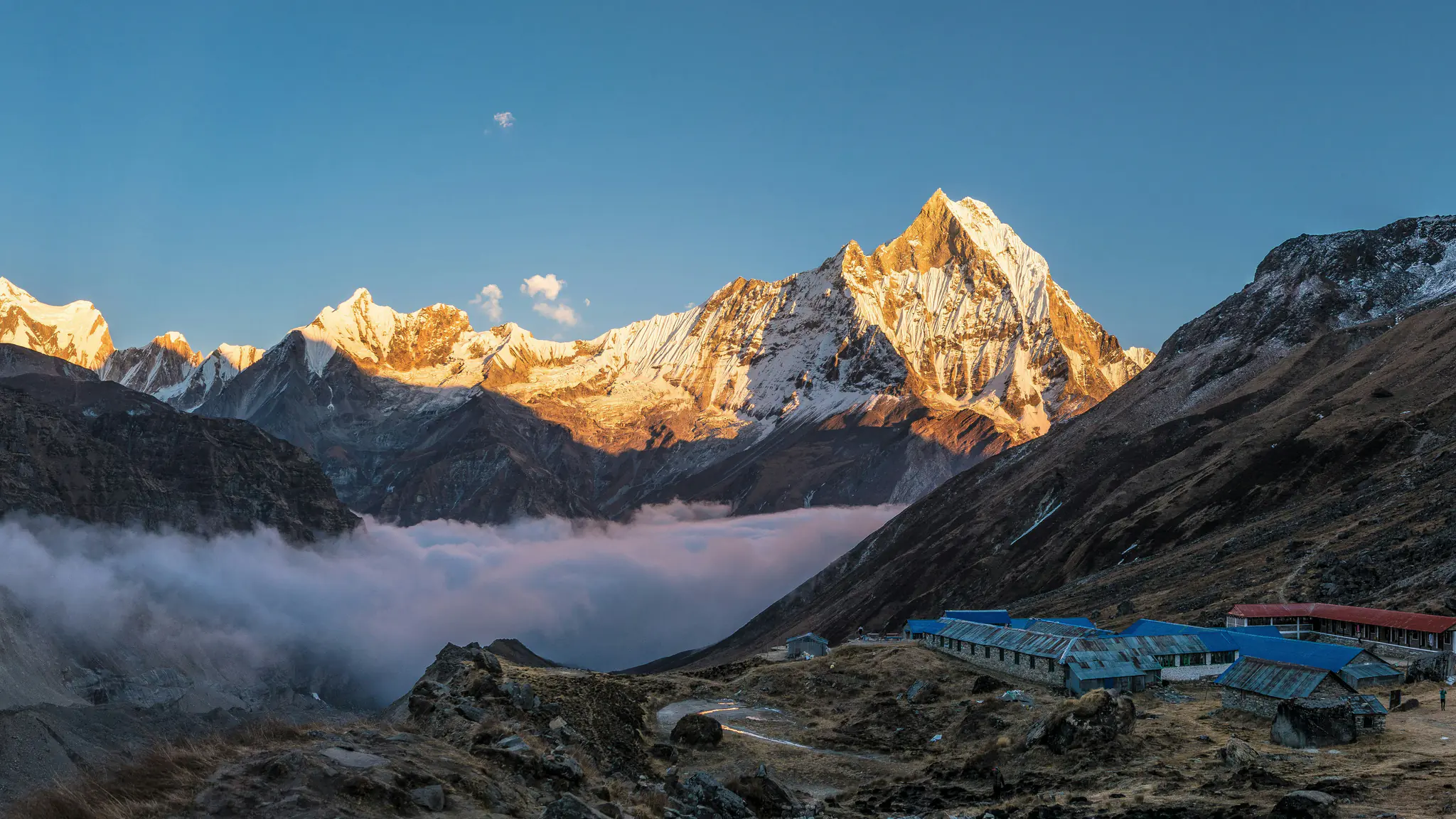
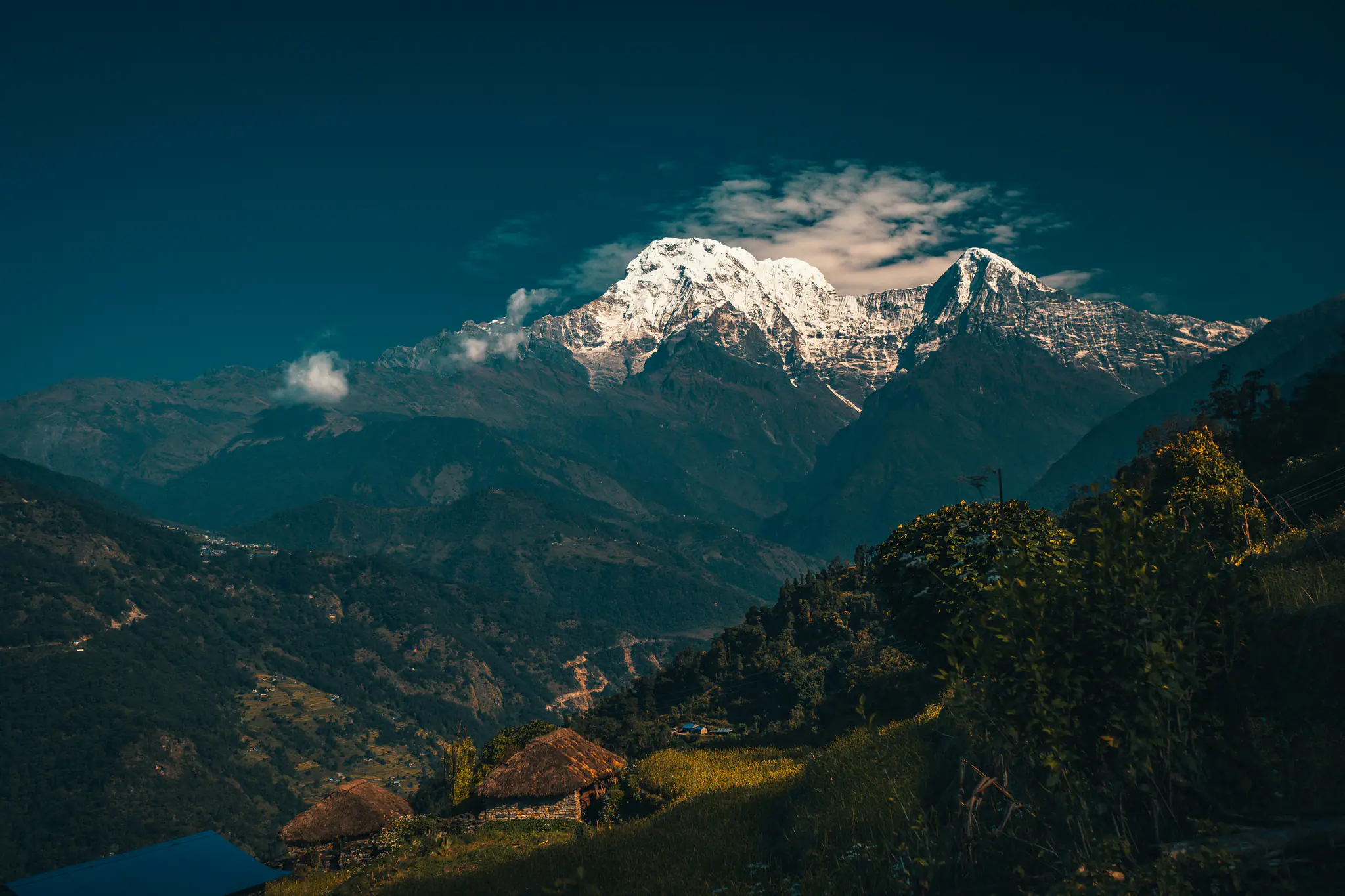
The Annapurna Base Camp Trek is one of Nepal’s most celebrated Himalayan journeys, leading trekkers deep into the natural amphitheater of the Annapurna Sanctuary. Rising to an altitude of 4,130 meters, the base camp sits beneath the towering face of Annapurna I (8,091 m), the tenth-highest mountain on Earth. The trail offers a remarkable blend of landscapes—from terraced farmland and subtropical forests to glacial valleys surrounded by high Himalayan peaks.
The journey begins with cultural exploration in Kathmandu before traveling to Pokhara, Nepal’s scenic lakeside city and gateway to the Annapurna region. From here, the trail winds through traditional villages such as Ulleri, Ghorepani, Tadapani, and Chhomrong, where trekkers encounter the welcoming hospitality of the Gurung and Magar communities. Stone staircases, suspension bridges, and forested ridges guide you through diverse ecosystems filled with rhododendron, bamboo, and oak.
A highlight of the route is the sunrise hike to Poon Hill (3,210 m), widely considered one of the finest viewpoints in Nepal. As dawn breaks, the horizon glows across a panorama of Himalayan giants including Annapurna, Dhaulagiri, Machhapuchhre (Fishtail), and Hiunchuli.
Continuing deeper into the Modi Khola Valley, the landscape gradually shifts into alpine terrain. The trail passes through settlements such as Bamboo, Dovan, and Deurali before reaching Machhapuchhre Base Camp, the gateway to the Annapurna Sanctuary. From here, the path opens into a spectacular glacial basin ringed by snow-covered peaks.
Standing at Annapurna Base Camp, trekkers find themselves surrounded by a dramatic 360-degree mountain panorama—Annapurna I, Annapurna South, Gangapurna, Tent Peak, and the sacred Machhapuchhre rising above the valley floor.
The return journey descends through lush forest trails to Jhinu Danda, where natural hot springs provide a soothing reward after days of trekking. With its combination of mountain scenery, rich biodiversity, and authentic Himalayan culture, the Annapurna Base Camp Trek remains one of the most rewarding and accessible adventures in Nepal.
Arrival in Kathmandu (1,360m/4,462 ft)
Drive from Kathmandu to Pokhara by Tourist Bus (820 m/2690 ft) 7-8 hours
Drive from Pokhara to Ghandruk (1,940m/6,365 ft) 4-5 hours
Trek from Ghandruk to Chhomrong (2,170m/7,119 ft) 6-7 hours
Trek from Chhomrong to Himalaya (2,920m/9,580 ft) 6-7 hours
Trek from Himalaya to Annapurna Base Camp (4,130m/13,550 ft) 6-7 hours
Trek from Annapurna Base Camp to Bamboo (2,310m/7,579 ft) 6-7 hours
Trek from Bamboo to Jhinu Danda (natural hot spring) (1,780m/5,840 ft) 6-7 hours
Drive from Jhinu Danda to Pokhara (820 m/2690 ft) 3-4 hours
Drive from Pokhara to Kathmandu by Tourist Bus (1,360m/4,462 ft) 7-8 hours
Final Departure from Kathmandu (1,360m/4,462 ft)
This itinerary is customizable. If you want to modify any aspect of this trip, let us know and we'll create a personalized itinerary just for you.
CUSTOMIZE MY TRIPThe ideal seasons for the Annapurna Base Camp Trek are spring (March to May) and autumn (September to November). Spring brings blooming rhododendron forests and mild temperatures, while autumn offers crystal-clear mountain views and stable weather. Winter trekking is possible but colder, and the monsoon months from June to August bring heavy rain and slippery trails.
Trekkers must obtain two permits: the Annapurna Conservation Area Permit (ACAP) and the TIMS card (Trekkers’ Information Management System). These permits support conservation and help authorities monitor trekking activities within the region.
The trek is considered moderate and suitable for trekkers with a reasonable level of fitness. Expect daily walks of 5–7 hours on varied terrain, including stone staircases and gradual ascents. Prior hiking experience is helpful but not mandatory if you prepare physically beforehand.
Most travelers can obtain a Nepal tourist visa on arrival at Tribhuvan International Airport in Kathmandu. Ensure your passport is valid for at least six months and bring passport photos for the application process.
The trek passes through several climate zones. Lower elevations are warm and subtropical, while higher areas near base camp are alpine with colder nights. Temperatures at Annapurna Base Camp can fall below freezing, especially in winter and early spring.
Here's a recommended packing list for your trek. Some items can be rented or purchased in Kathmandu or at the trailhead.